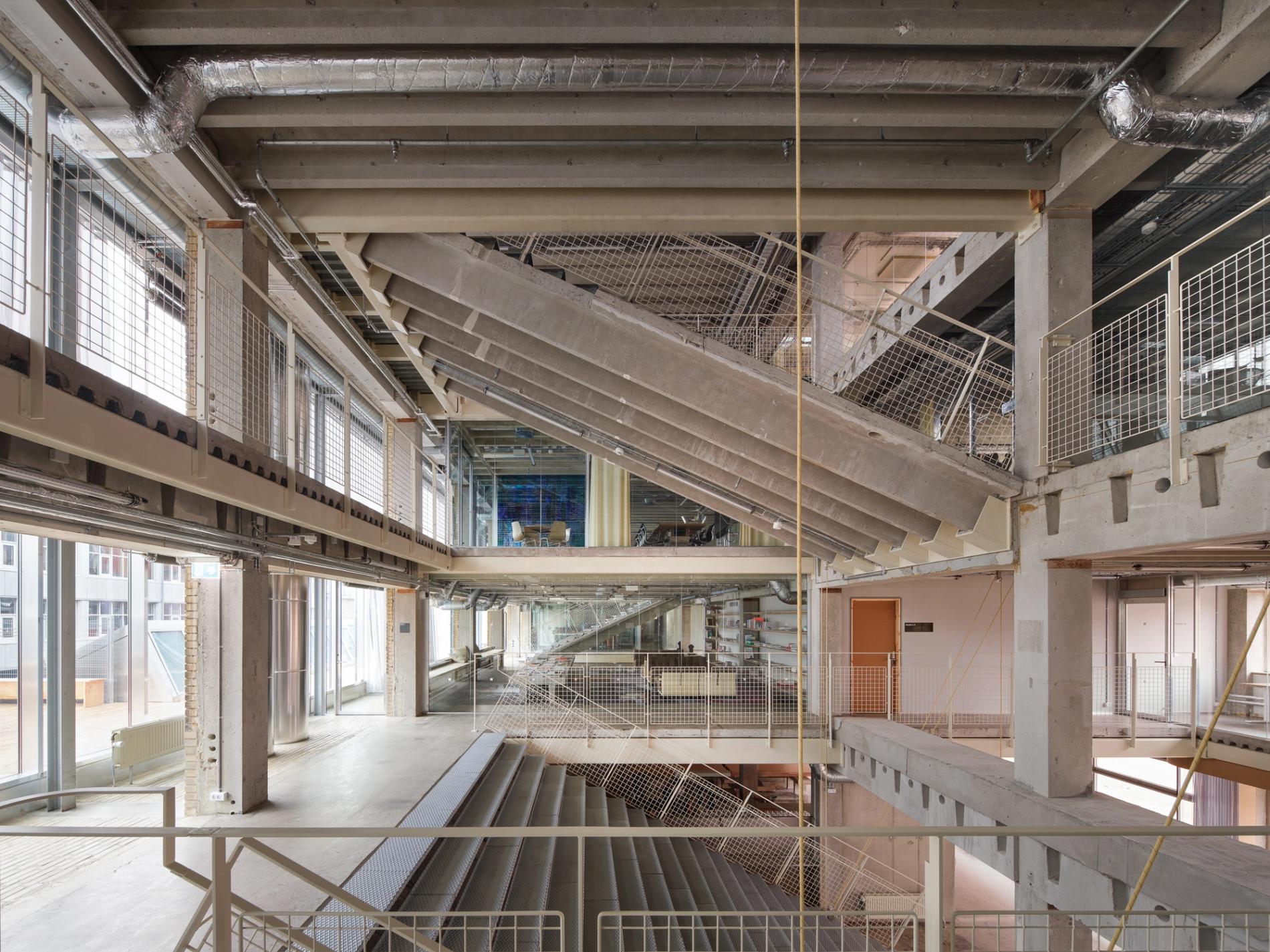
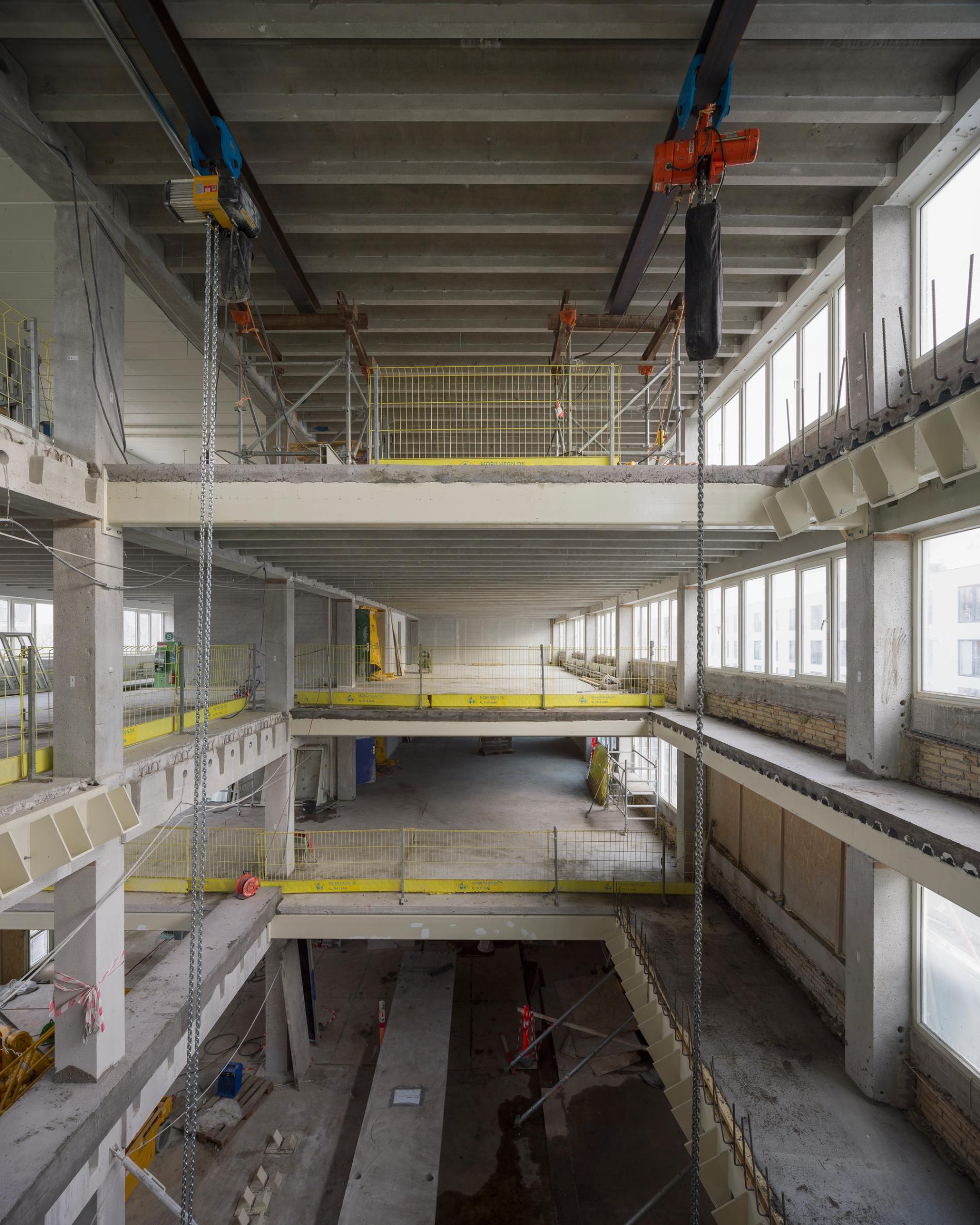
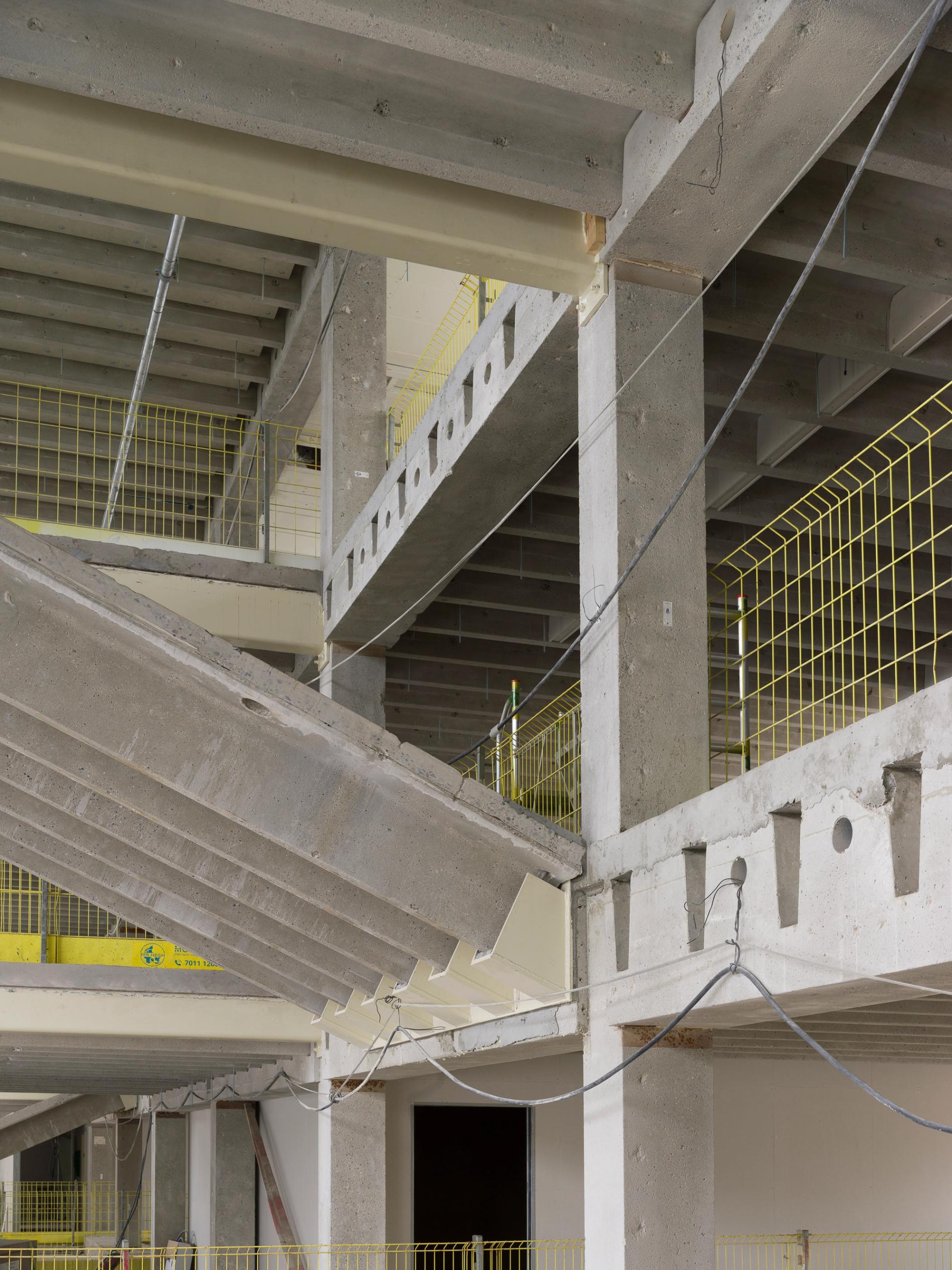
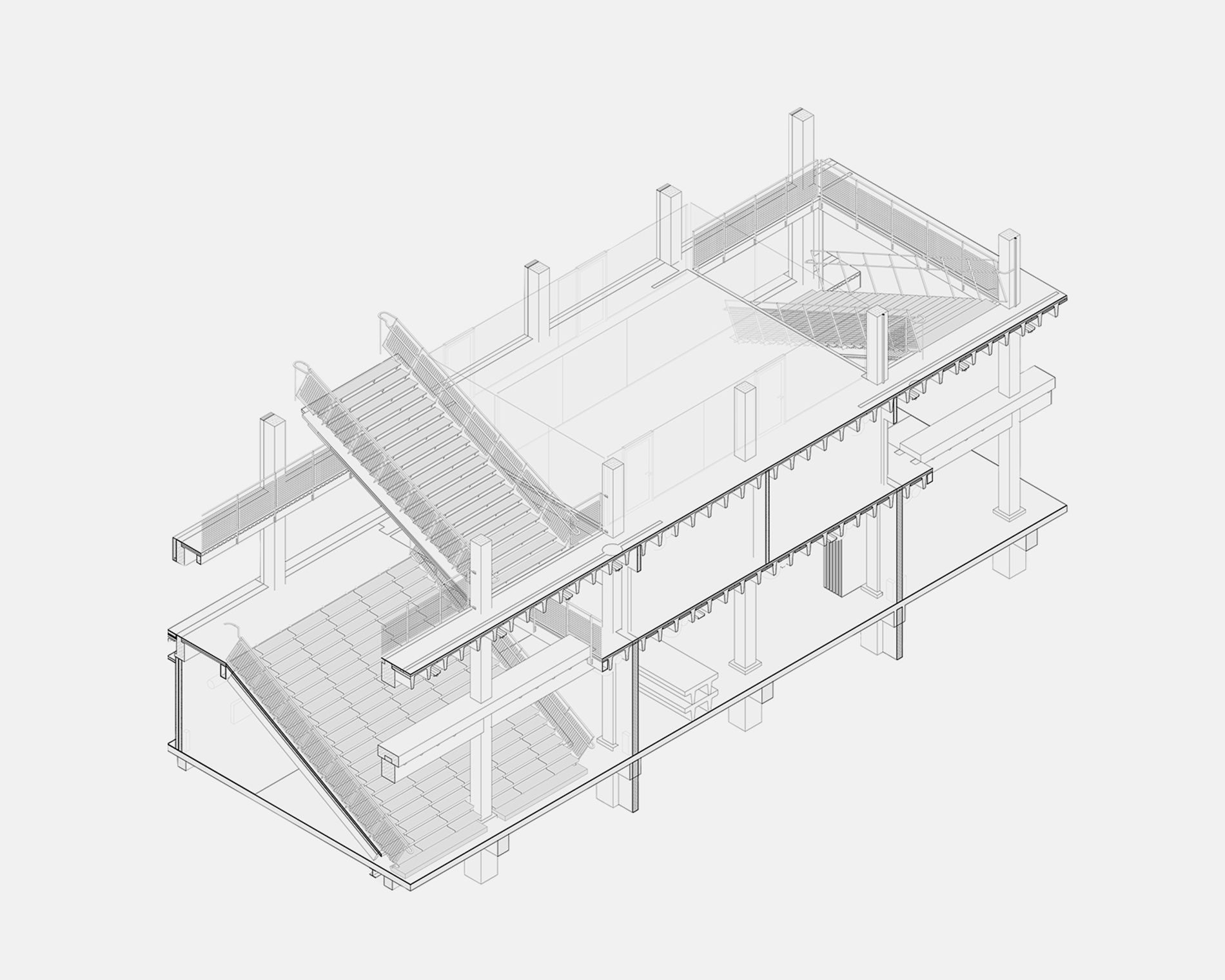
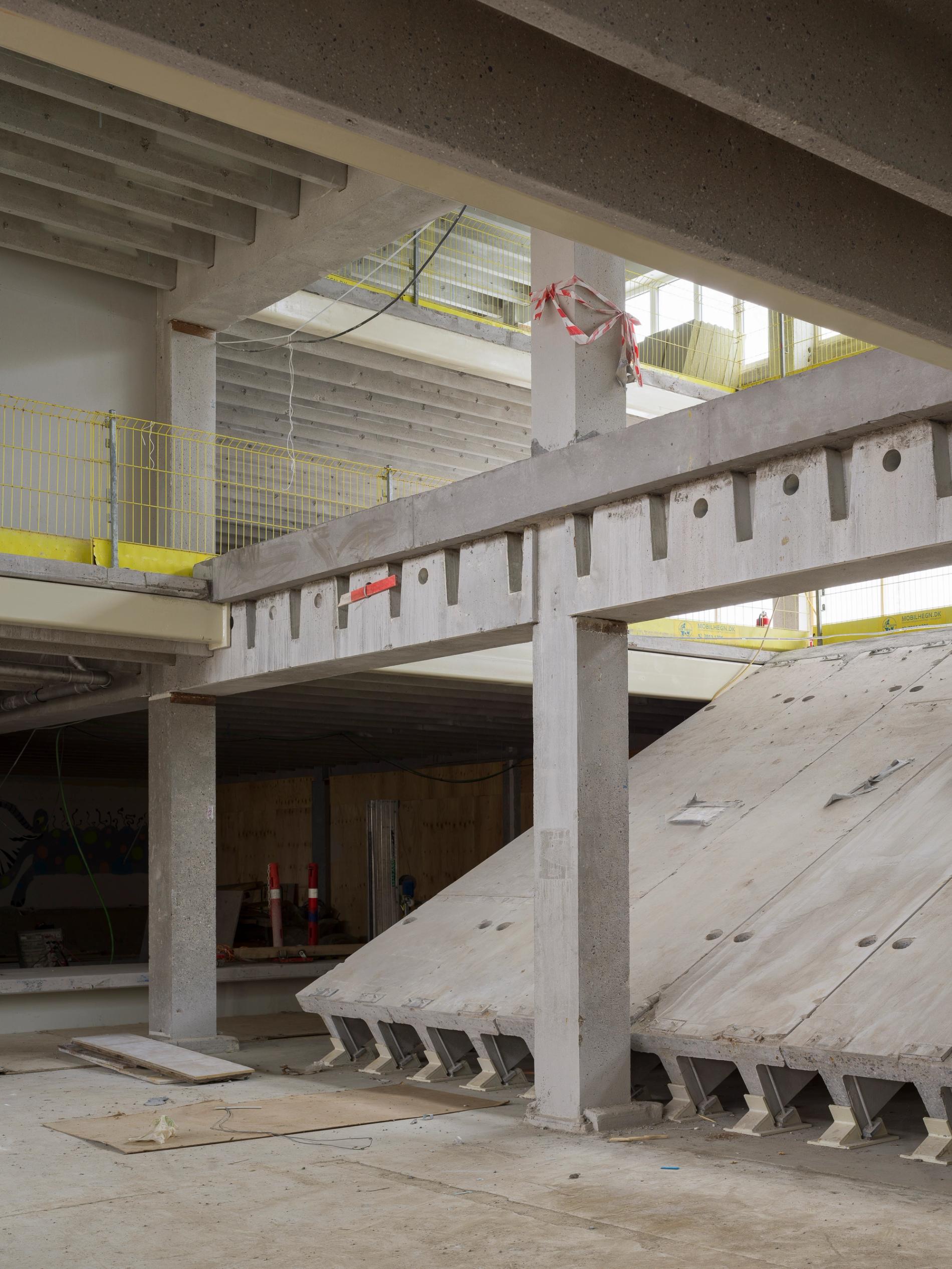
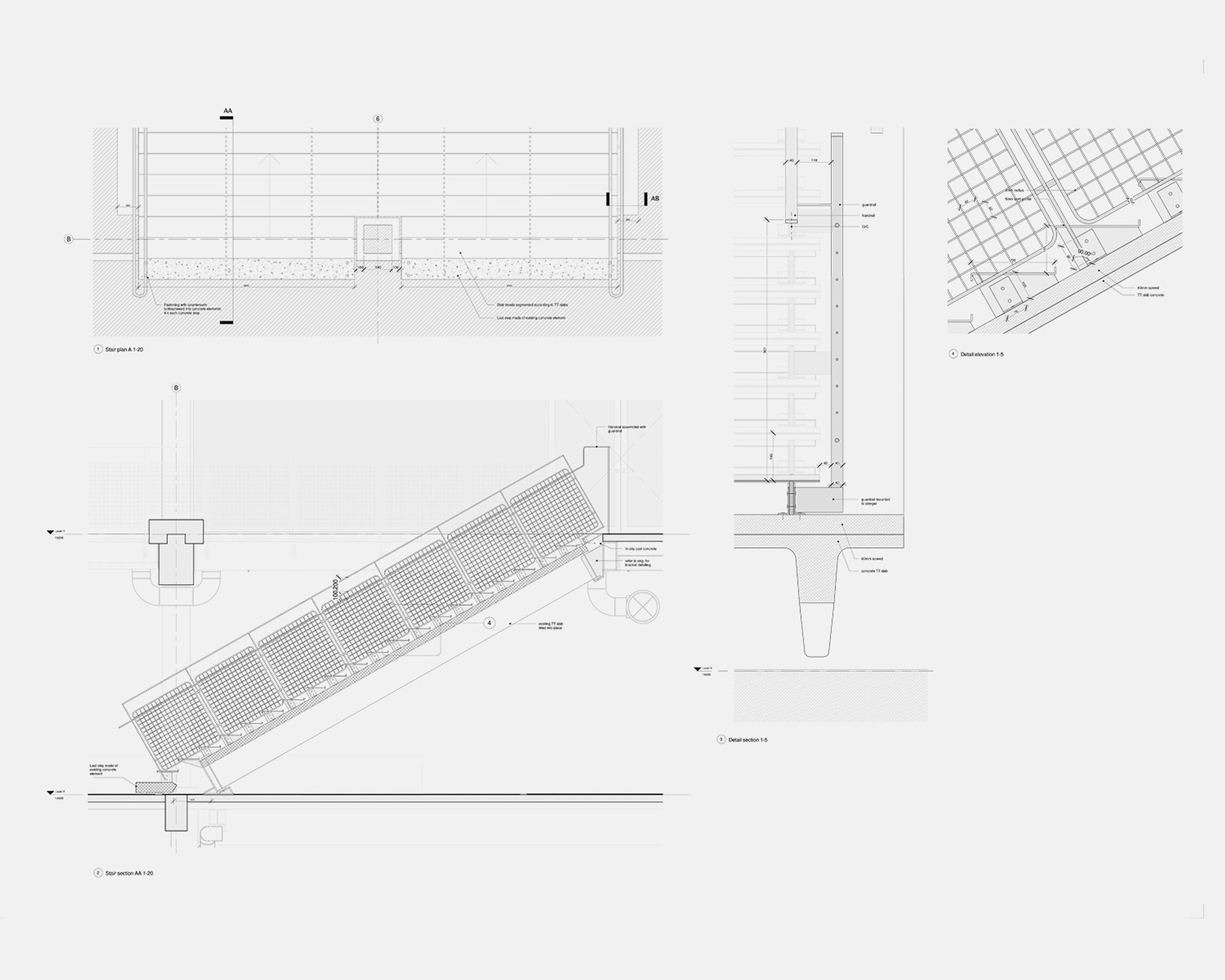
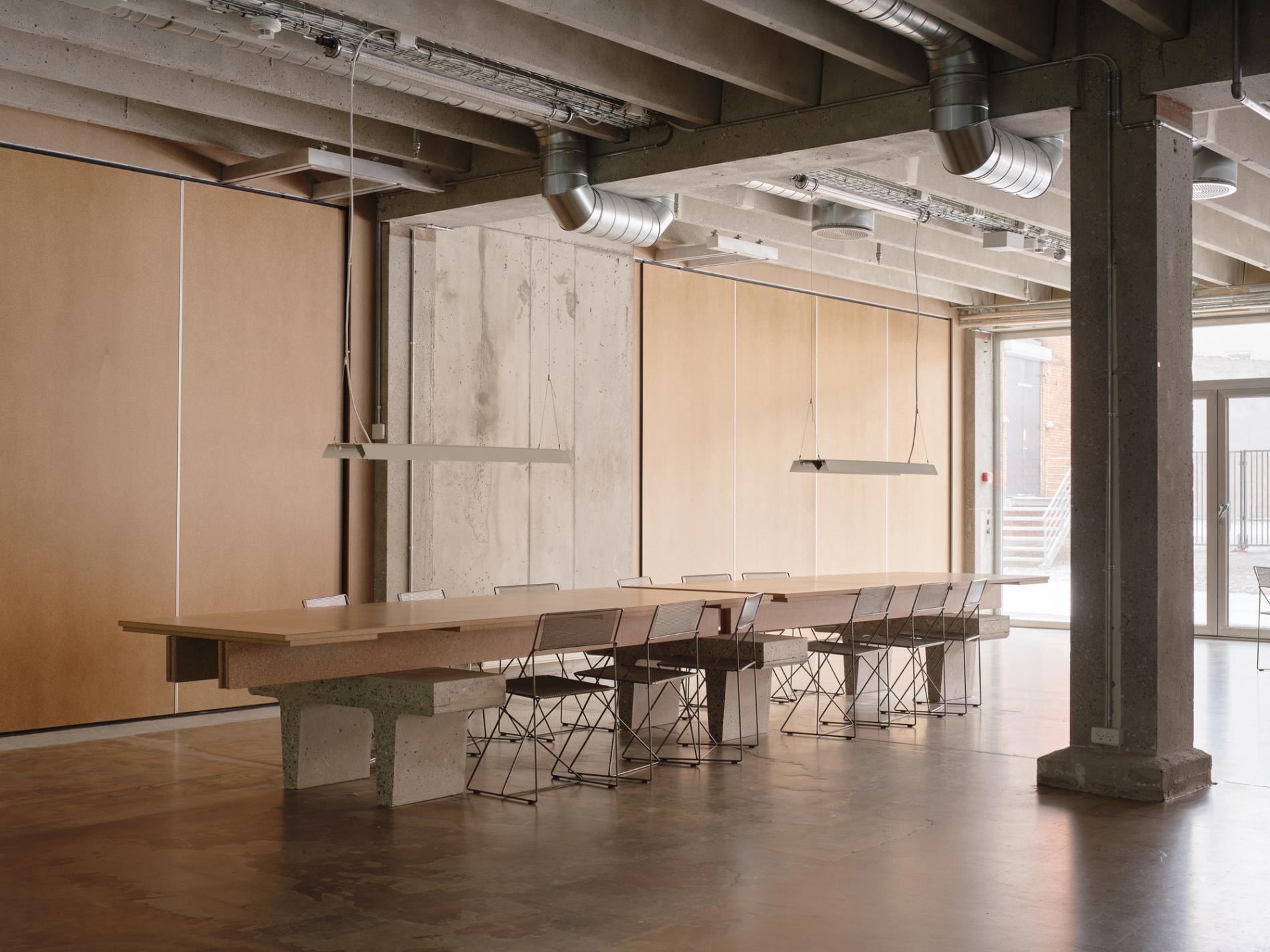
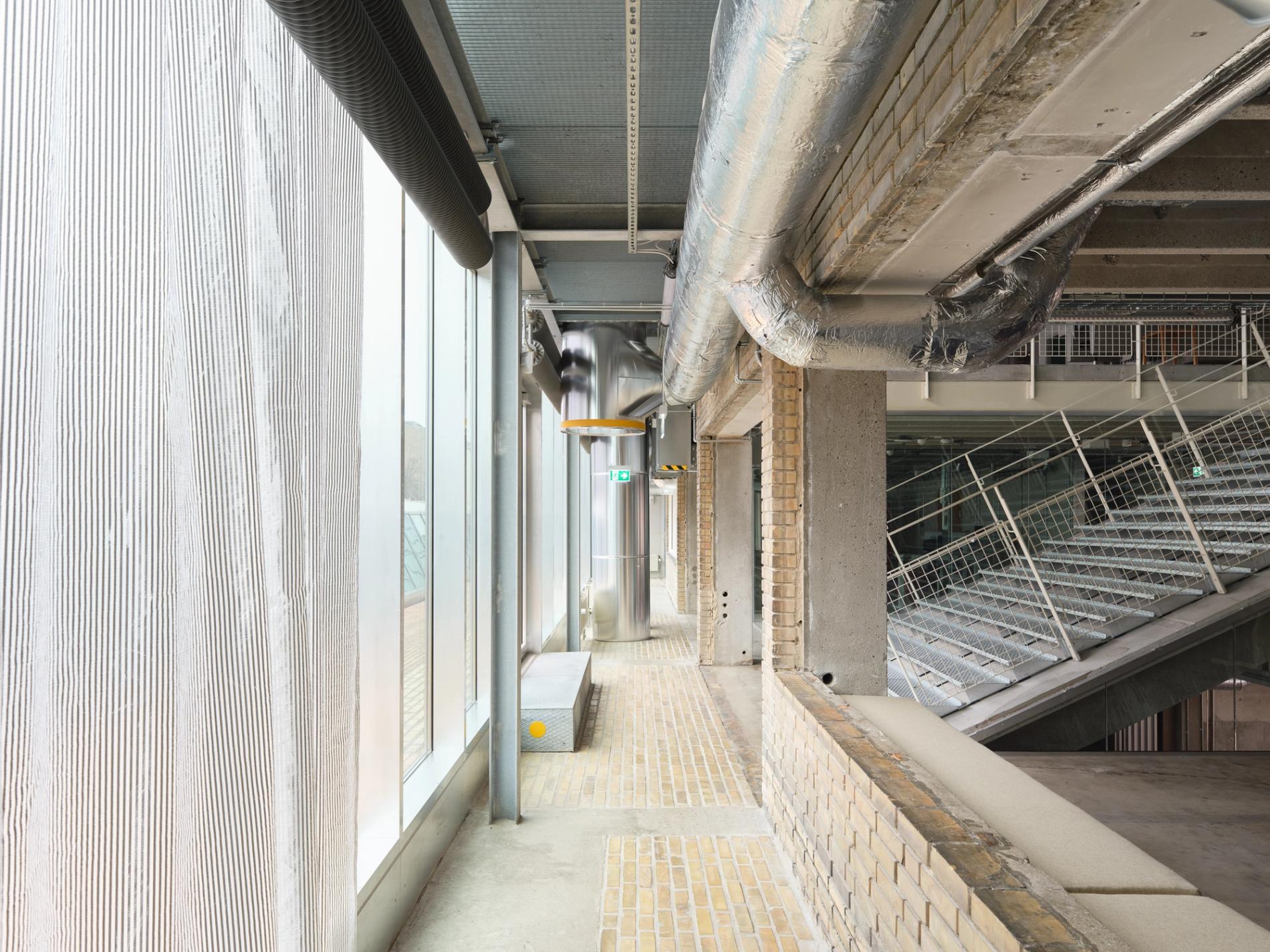
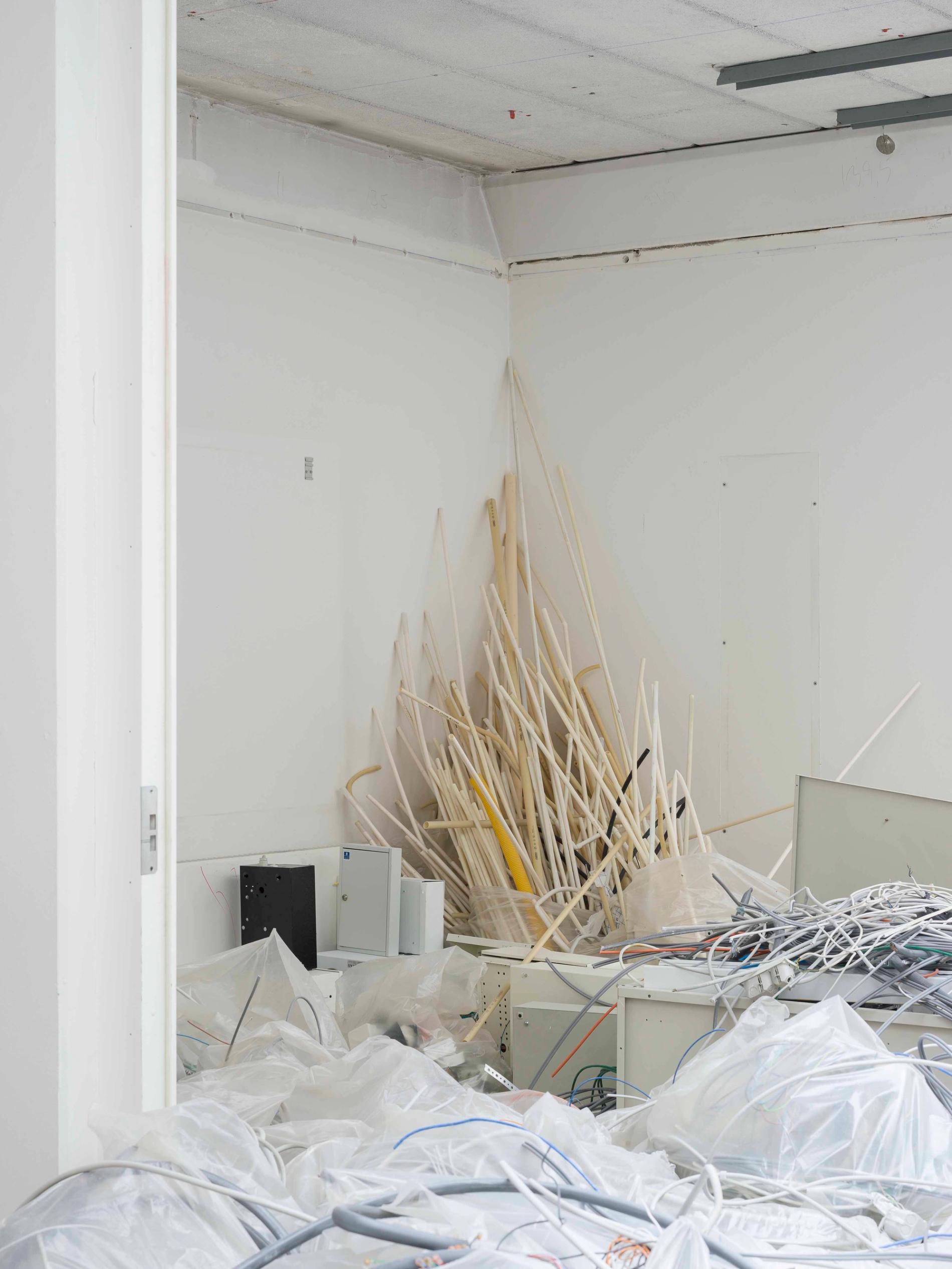
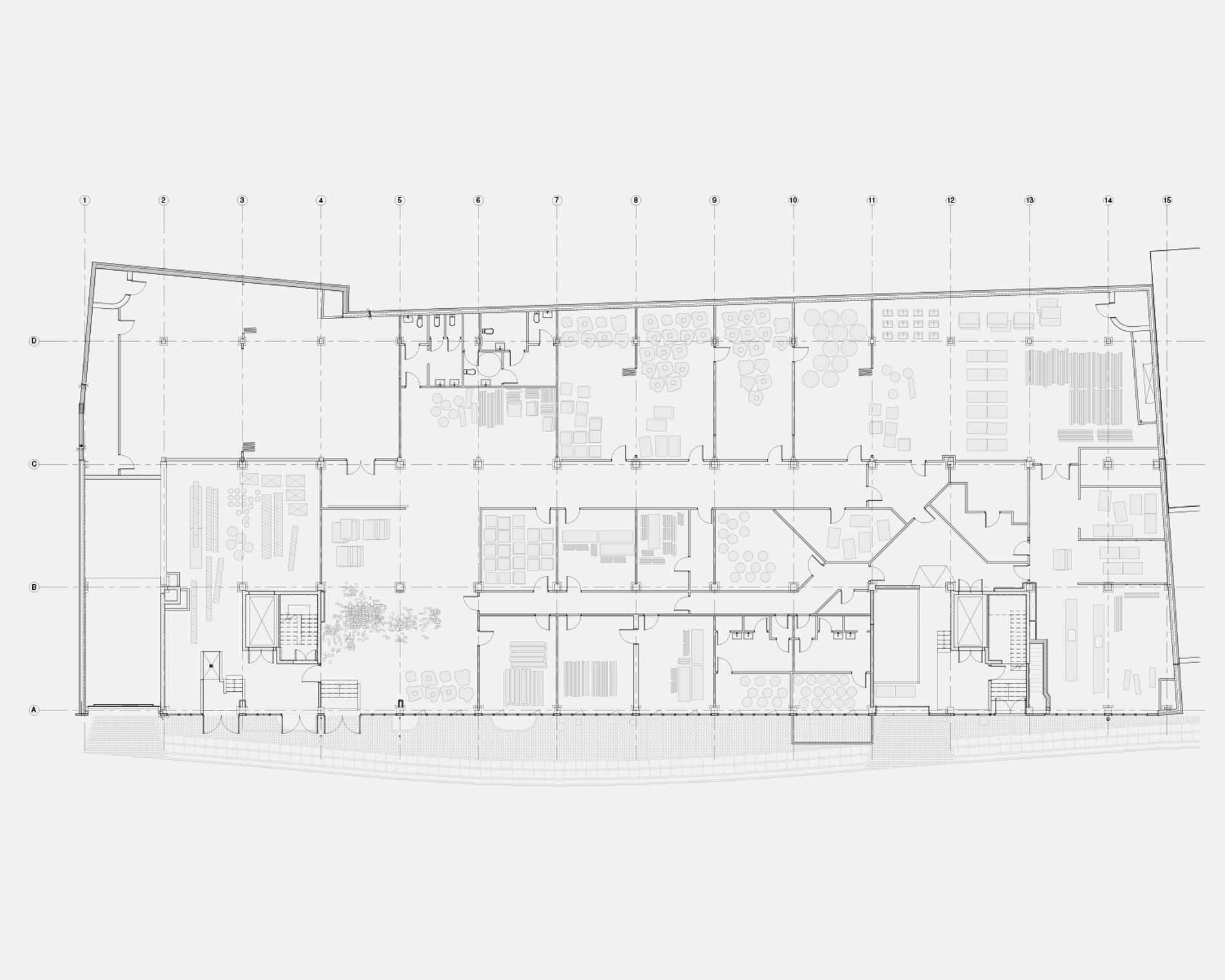
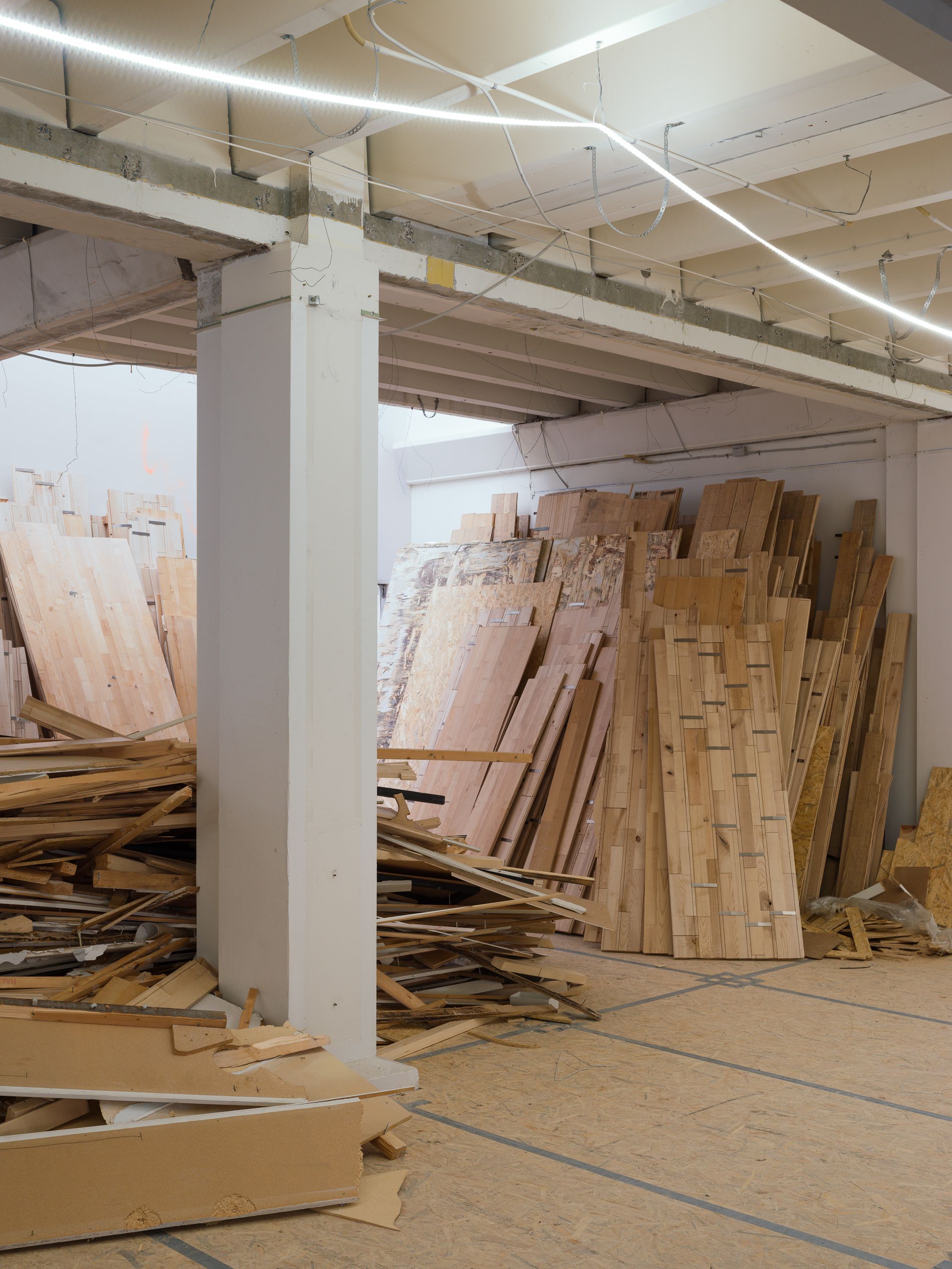
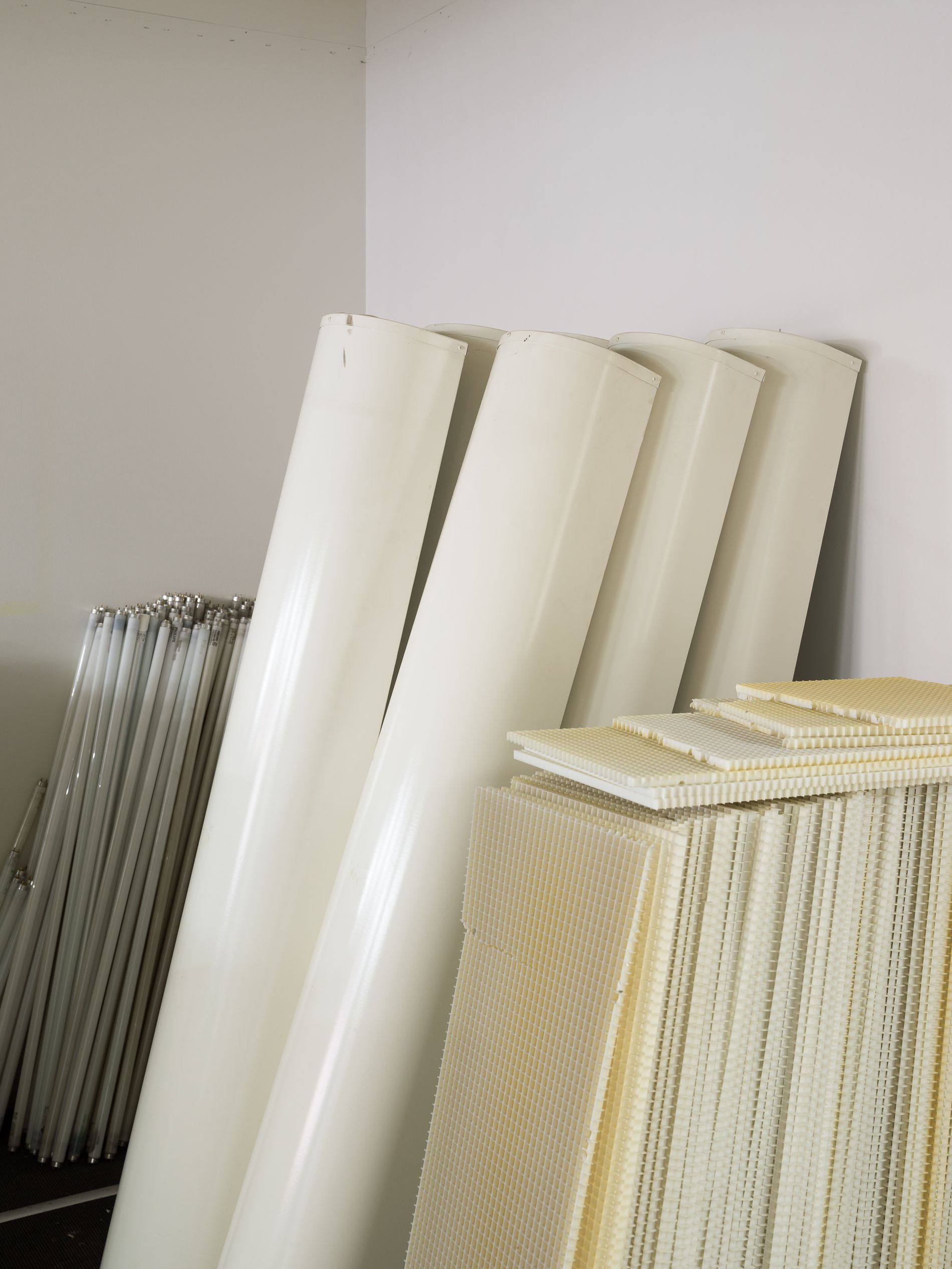
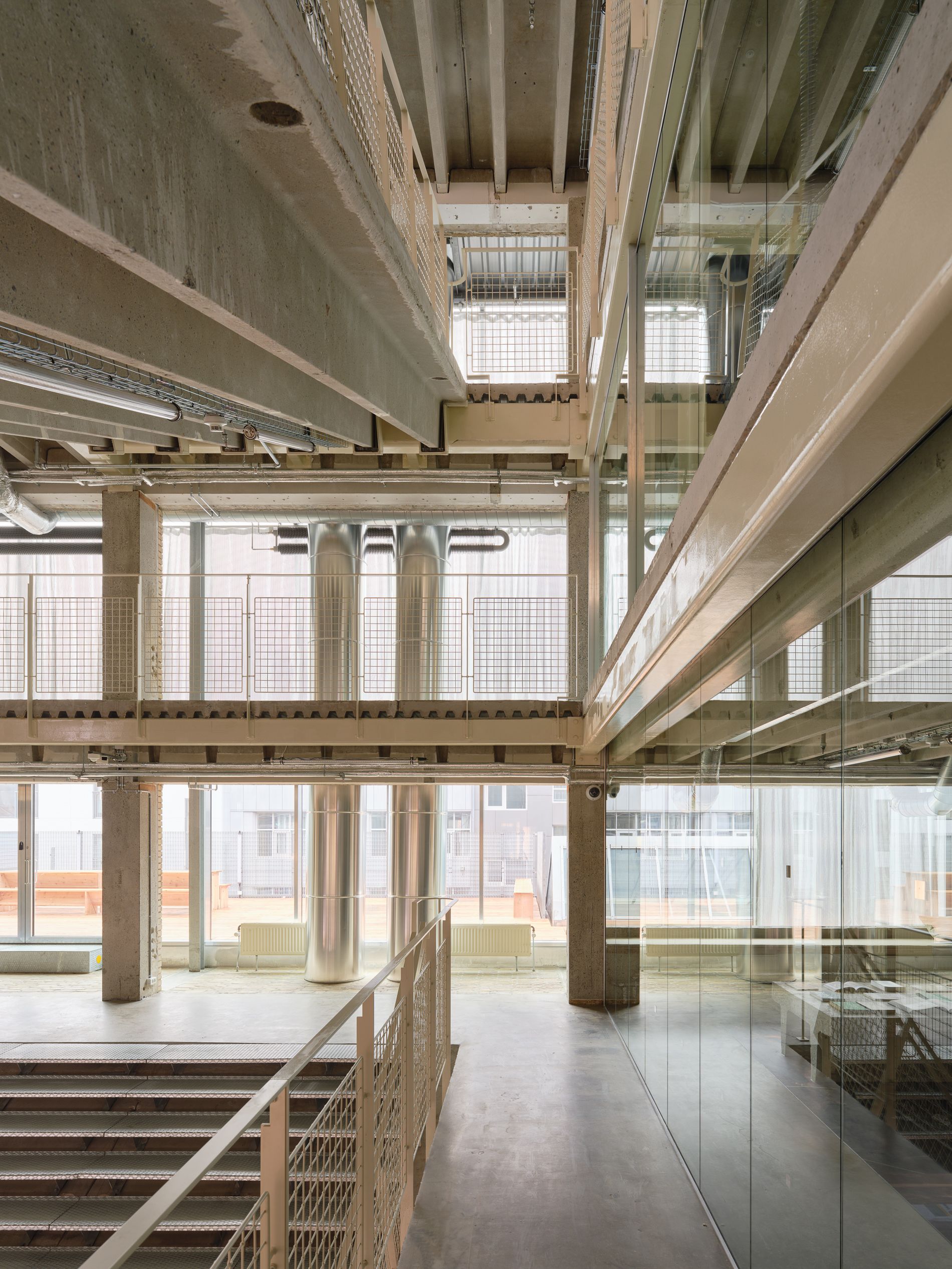
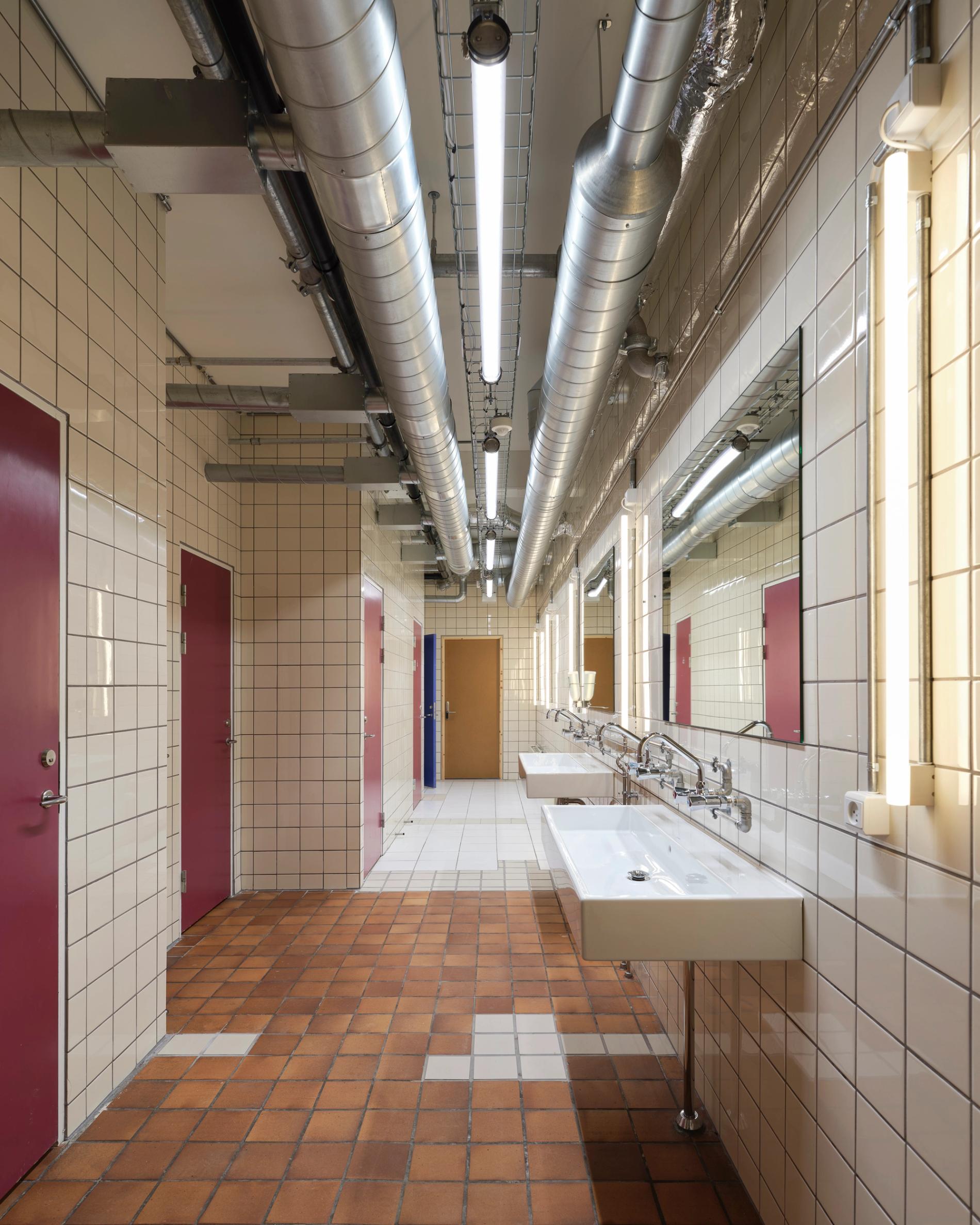
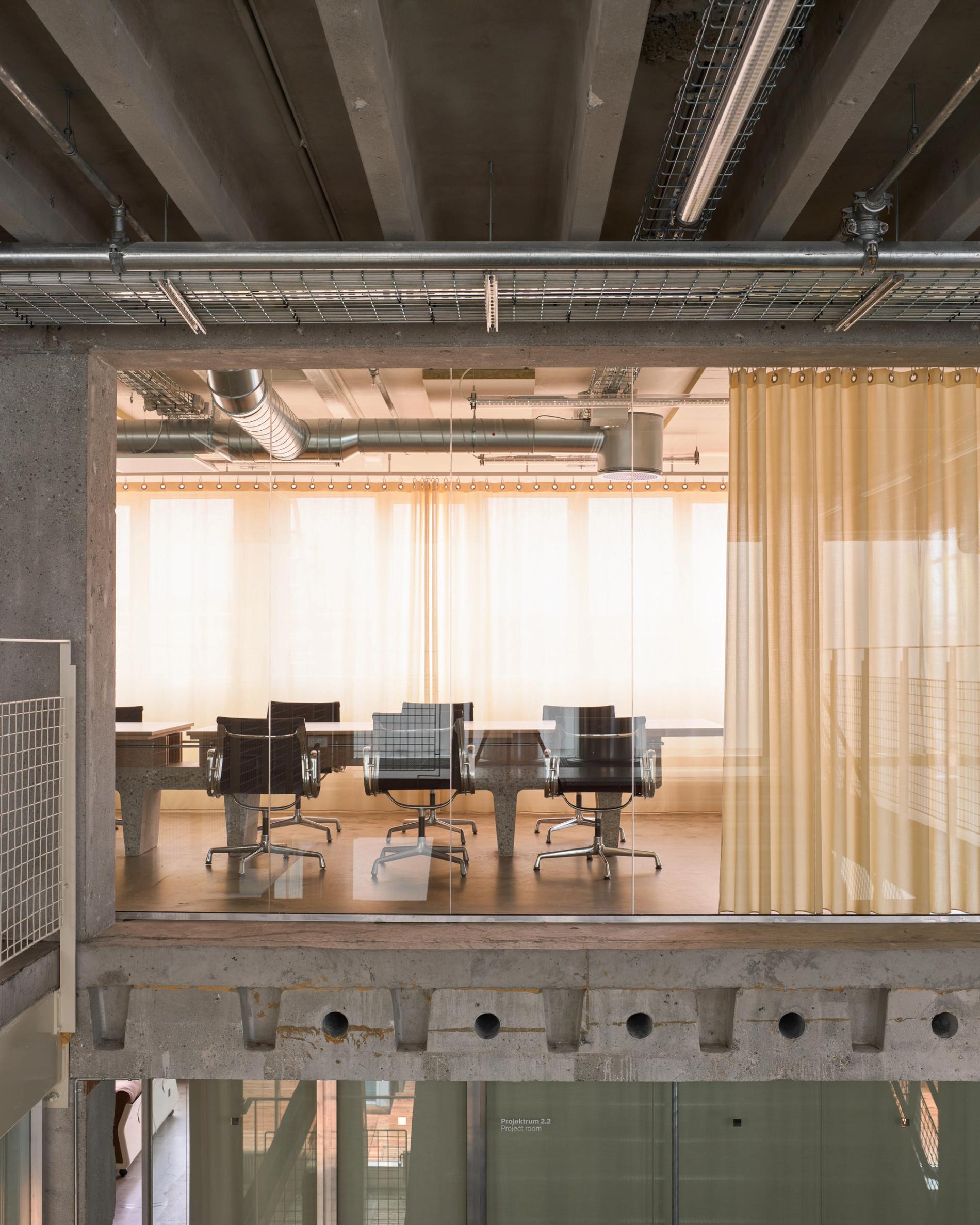
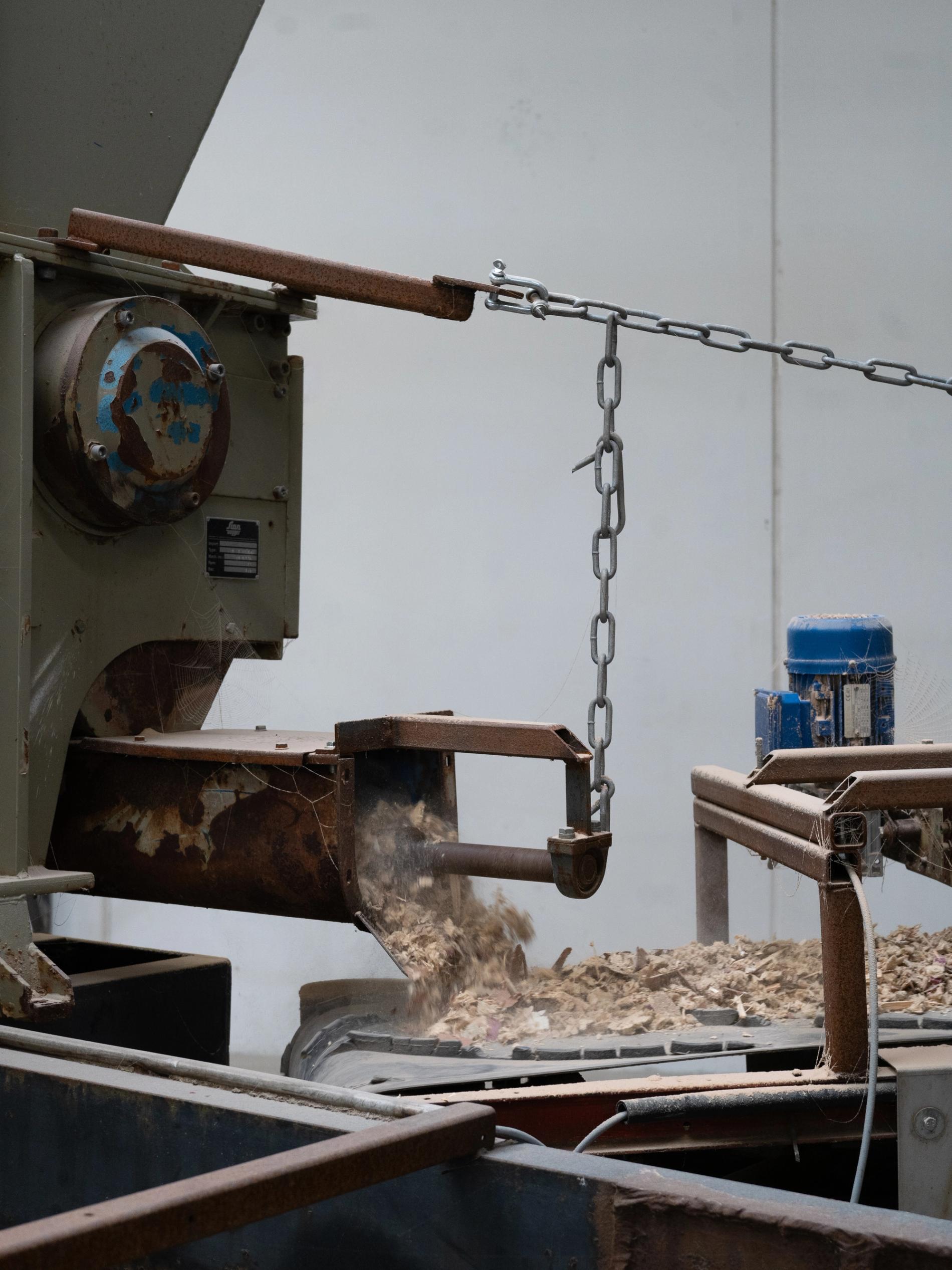
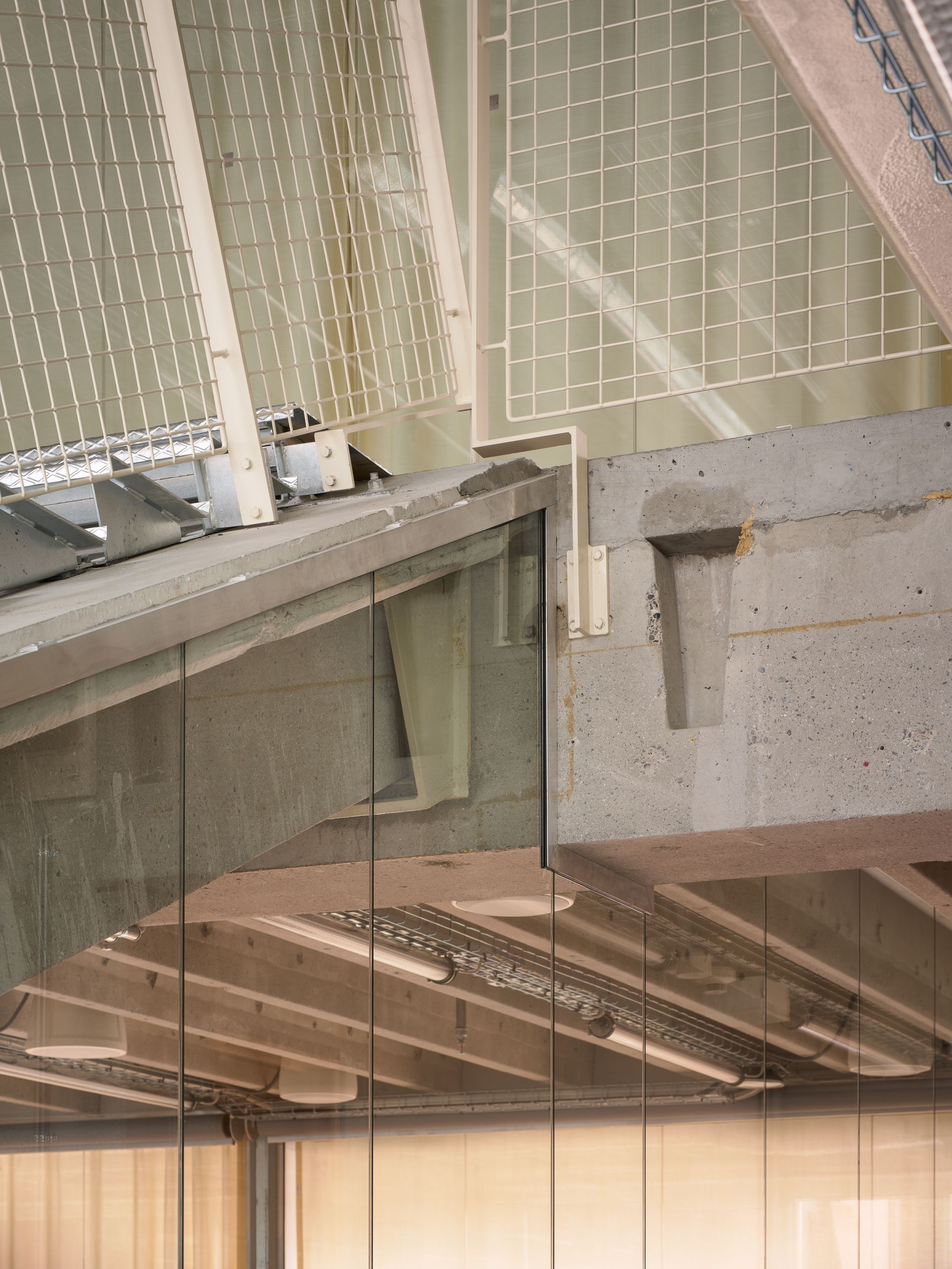
Floor slabs tilted into staircases, facade elements reworked into pavement, fittings transformed into furniture – the transformation of Thoravej 29 allows the building to recycle itself. It reflects a pragmatic approach to the available resources, reassessing the value of the existing by treating the building as its own material bank.
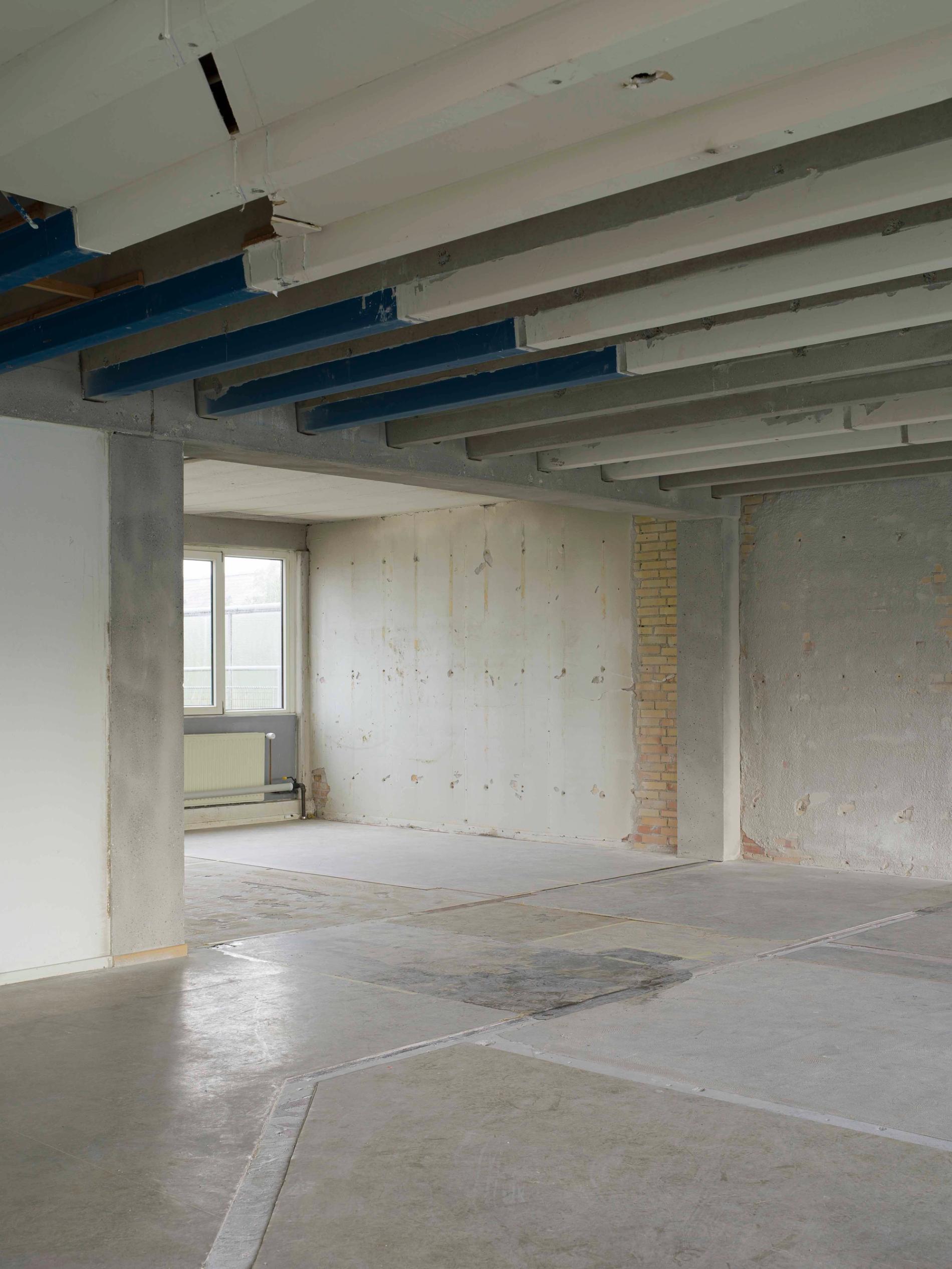
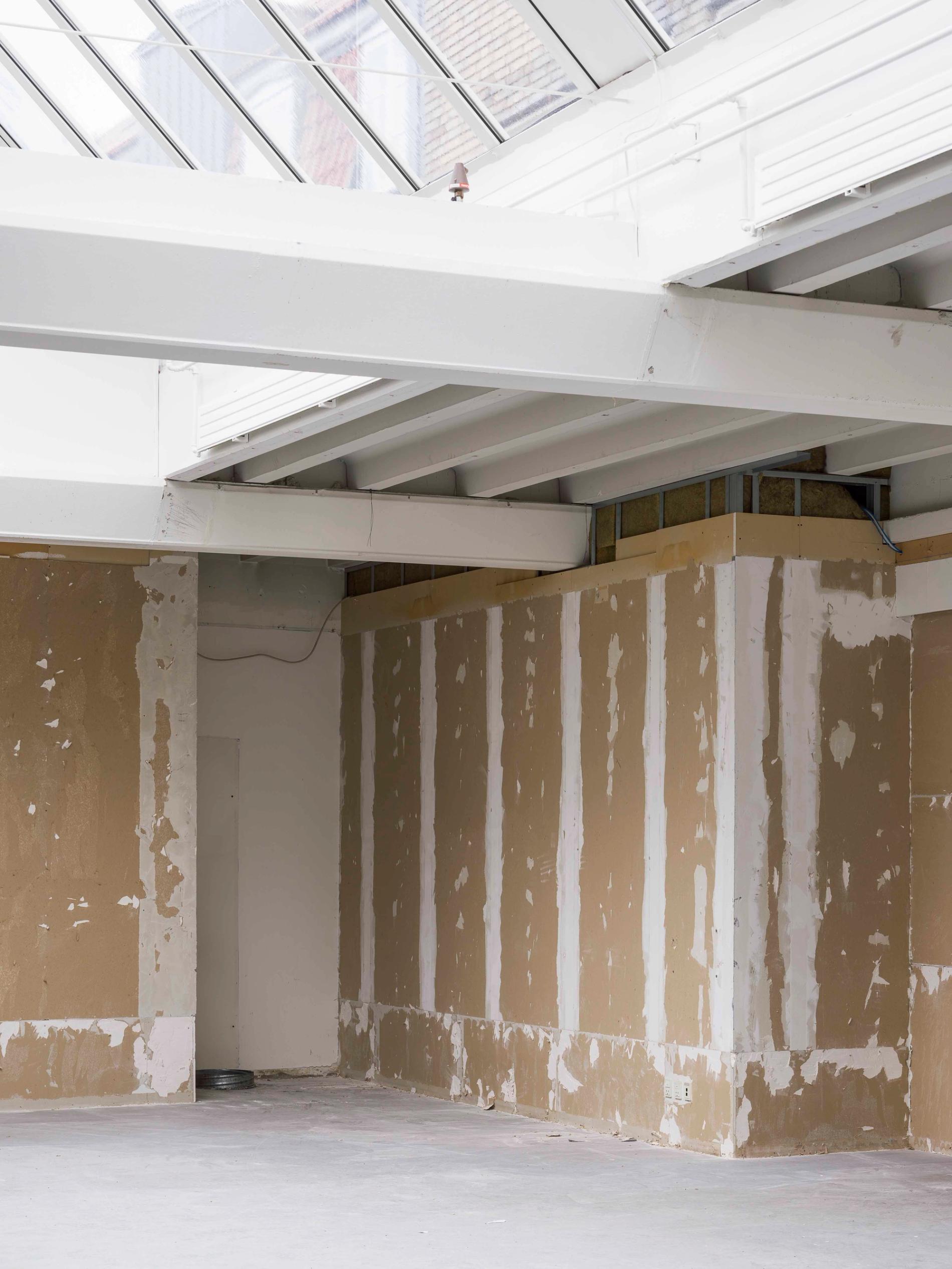
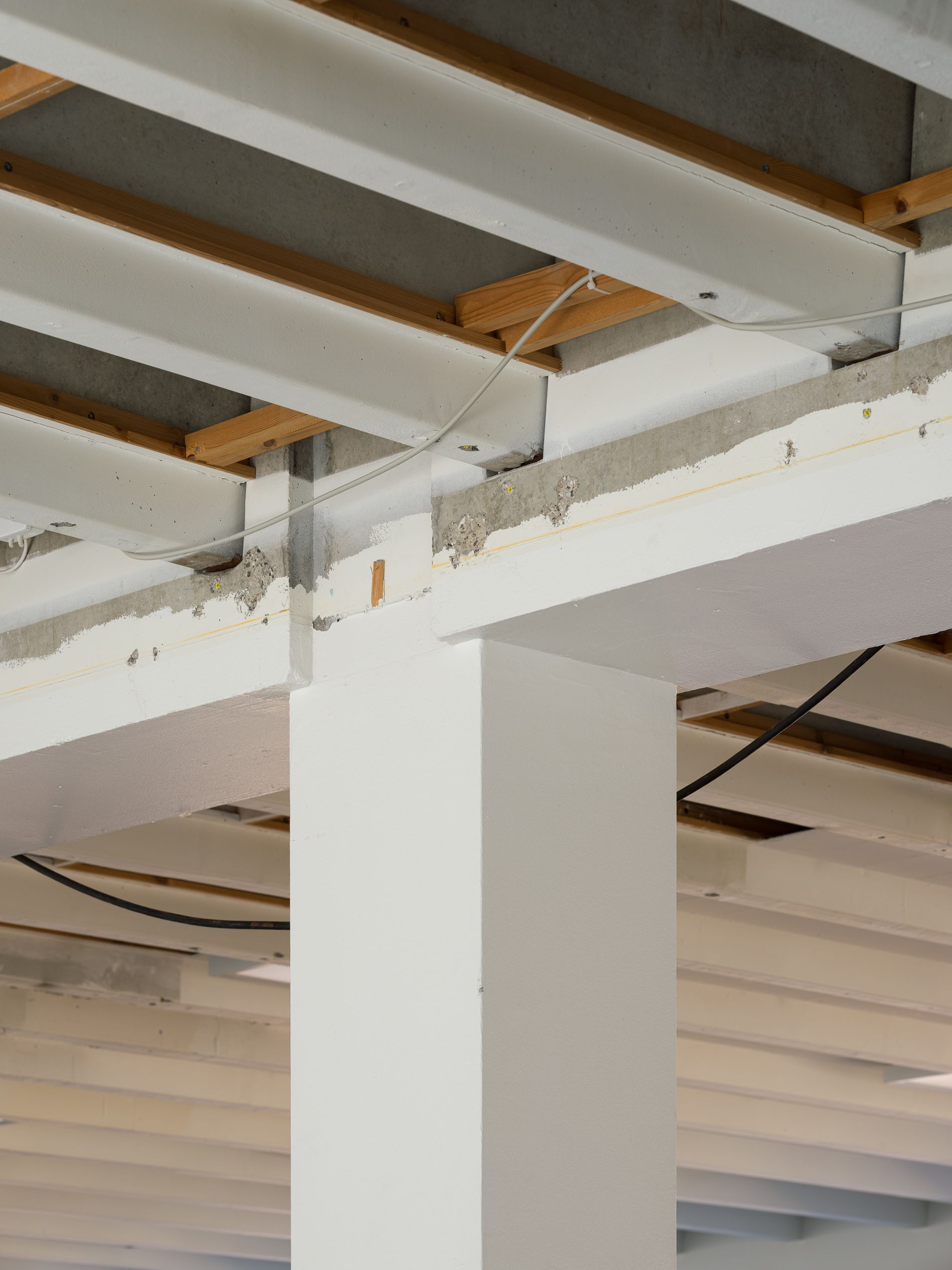
Originally built in 1967 by architect Erik Stengade, the former factory building most recently served as a municipal disability center for the City of Copenhagen. During the transformation, it was stripped down to its core: a column-beam structure with TT-slabs and facades marked by horizontal window bands. The new program required fundamental changes to the building’s anatomy. Lightweight walls and built-in furnishings were removed, while other elements were relocated. Everything dismantled in the process was stored with the intention of being reused in the final project – even components typically considered insignificant were treated as potential resources to be reintegrated.